How to Increase Raffle Ticket Sales Without Spending More on Advertising
Many nonprofits assume that increasing raffle ticket sales requires a larger marketing budget. However, existing supporters, volunteers, board members and community partnerships may provide opportunities to expand campaign reach without additional advertising expenses. Discover how to improve raffle performance through Ambassador programs, stronger messaging, better conversion rates and smarter use of your organization's existing resources.
How to Increase Raffle Ticket Sales Without Spending More on Advertising
Updated RaffleGives Fundraising Guide | October 2026
A nonprofit does not necessarily need a larger advertising budget to sell more raffle tickets. In many cases, the opportunity lies in reaching more of the people already connected to the organization, making it easier for supporters to participate and understanding which fundraising activities actually produce results.
Consider a nonprofit with 1,000 email contacts, an active Facebook page, several board members and a network of volunteers. The organization may have thousands of potential connections through those relationships, yet its raffle promotion might consist of two emails and a handful of social media posts. Before investing in paid advertising, the nonprofit should consider whether it has fully activated the audience it already has.
That is where a more deliberate approach to raffle marketing can make a difference. By improving how campaigns are distributed, identifying weaknesses in the participation process and giving supporters better tools to share the fundraiser, nonprofits can potentially increase ticket sales without proportionally increasing marketing expenses.
The goal is not simply to promote the raffle more often. It is to make every existing marketing channel work harder.
Quick Answer: How Can Nonprofits Increase Raffle Ticket Sales Without More Advertising?
Nonprofits can improve raffle ticket sales by activating existing supporters, expanding campaign distribution through volunteers and Ambassadors, simplifying the ticket-purchasing experience and measuring which outreach channels generate participation. These improvements focus on using existing resources more effectively rather than purchasing additional advertising.
The most useful starting point is to identify where the current campaign is underperforming. Some organizations struggle to reach enough people, while others attract attention but fail to convert interested visitors into ticket purchasers.
Those problems require different solutions. A campaign with limited visibility needs broader distribution, while a campaign attracting visitors but generating few purchases may need clearer messaging, simpler ticket options or a better mobile experience.
Understanding the difference can prevent nonprofits from spending money to solve the wrong problem.
Why More Advertising Is Not Always the Answer
When raffle ticket sales fall behind expectations, increasing promotional spending can seem like the obvious response. Additional advertising may generate more visitors, but it does not necessarily address the reason existing visitors are not participating.
Imagine a nonprofit spends $300 promoting its raffle and generates 1,000 campaign-page visits. If only 10 visitors purchase tickets, the organization has a 1% visitor-to-purchaser conversion rate. Increasing advertising might produce more traffic, but the campaign could continue converting poorly.
Now consider what happens if the organization improves its campaign page, clarifies its messaging and increases that conversion rate to 2%. The same 1,000 visits would produce 20 purchasers instead of 10, assuming comparable traffic quality and purchasing behavior.
That is a meaningful improvement without increasing advertising expenditure.
The numbers are illustrative, but the principle is important. Before paying to reach more people, nonprofits should evaluate how effectively they are engaging the people they already reach.
Start by Identifying Your Raffle's Biggest Performance Gap
Every raffle has several stages between initial awareness and completed participation. A supporter must discover the campaign, become interested, understand the offer, decide to participate and successfully complete the purchase.
A weakness at any stage can reduce overall ticket sales. Organizations that evaluate only gross revenue may overlook where potential participation is being lost.
A useful diagnostic framework separates performance into four areas.
Campaign Area | Warning Sign | Potential Improvement |
|---|---|---|
Awareness | Few people visit the campaign | Activate more existing supporters and distribution channels |
Engagement | People see promotions but rarely click | Improve messaging and calls to action |
Conversion | Visitors arrive but few purchase | Simplify the page and clarify ticket options |
Distribution | Most sales come from one channel | Activate Ambassadors, volunteers and community partners |
These categories help nonprofit teams make more informed decisions about their next steps. Instead of asking everyone to post more frequently, the organization can focus its efforts on the specific stage that needs improvement.
For example, a campaign with strong conversion but limited traffic may benefit from additional Ambassador participation. A campaign with substantial traffic but weak conversion should examine the purchasing experience before expanding distribution.
The most effective improvement is often the one that addresses the campaign's largest existing weakness.
Activate the Supporters You Already Have
Most nonprofits have relationships that extend beyond their current fundraising database. Board members, volunteers, employees, previous donors, program participants and community partners may all be willing to help introduce the campaign to additional people.
However, those relationships do not automatically translate into ticket sales. Supporters need to know that the raffle exists, understand why it matters and have a simple way to participate or share it.
A nonprofit might have 1,000 email contacts but receive meaningful engagement from only a portion of them. That does not necessarily mean the remaining contacts are uninterested. Some may have missed the original announcement, while others may respond better to a different message or a reminder closer to the drawing.
The organization can improve its reach by communicating consistently and providing relevant updates rather than sending the same generic announcement repeatedly. Each message should give recipients a reason to pay attention, whether that involves the mission, the growing prize, an upcoming deadline or the campaign's progress.
The objective is to make better use of existing relationships before investing heavily in acquiring new ones.
Turn Volunteers and Board Members Into Fundraising Ambassadors
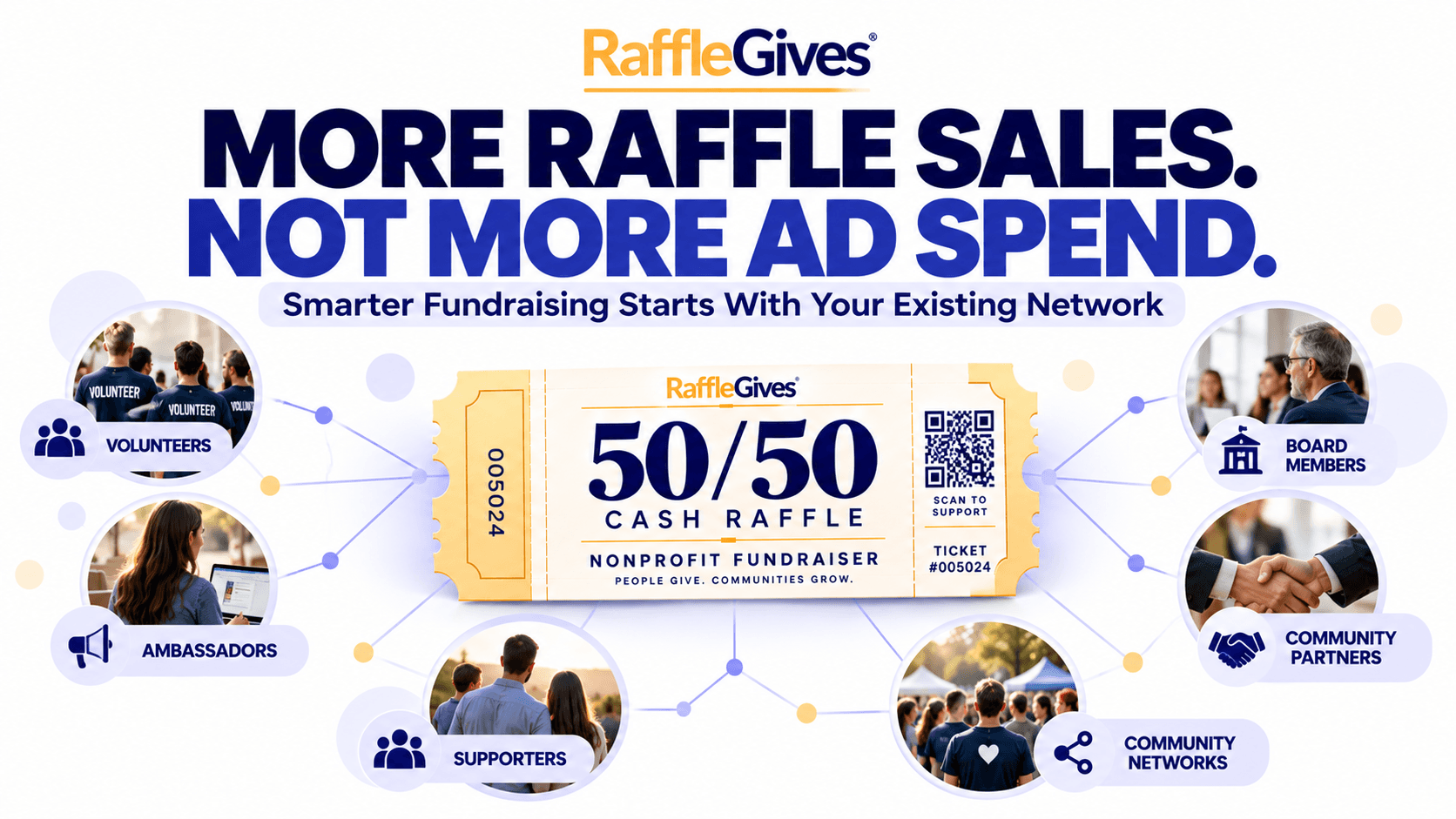
One of the most effective ways to expand raffle distribution is to involve people who already care about the organization. Volunteers and board members often have personal and professional relationships that extend well beyond the nonprofit's official communication channels.
The RaffleGives Ambassador Program supports this approach by providing shareable campaign links and QR codes that help organizations distribute their raffles through participating supporters. Rather than relying exclusively on the nonprofit's social media accounts, the campaign can reach people through trusted personal connections.
Consider an organization with 20 active volunteers. If each volunteer introduces the raffle to 25 people, the campaign could generate 500 potential additional contacts before accounting for overlap between their networks.
Not everyone contacted will participate, and those contacts should not be treated as guaranteed sales. Nevertheless, the example illustrates how activating an existing volunteer network can increase campaign reach without requiring a larger advertising budget.
The key is making participation easy. Volunteers should receive approved messaging, the correct campaign link and clear instructions about how they can help within applicable raffle rules.
Give Ambassadors a Specific Assignment
Simply asking supporters to share a raffle may produce inconsistent results. Some will participate immediately, while others may intend to help but never get around to it.
A more effective approach is to provide a clear, manageable assignment. For example, a nonprofit might ask each participating Ambassador to share the campaign with ten personal contacts during launch week and provide one reminder during the final week.
This creates a defined activity that volunteers can complete without committing to an extensive fundraising project. It also gives the organization a better understanding of how many people are actively helping distribute the campaign.
Organizations should avoid turning Ambassador participation into an unauthorized compensated sales arrangement. State charitable gaming rules may restrict who can sell tickets, who can receive compensation and how third-party fundraising activity is conducted.
The Ambassador Program is a distribution tool, not an exemption from those requirements.
Improve Your Raffle Messaging Before Increasing Its Frequency
More promotional messages will not necessarily improve ticket sales if the underlying message is unclear. A nonprofit can publish frequently and still struggle to generate interest when its communications do not explain why someone should participate.
Effective raffle messaging generally combines three elements: the opportunity to participate, the organization's mission and a clear next step. Supporters should understand what the raffle offers, whom it benefits and how to learn more or purchase eligible tickets.
Consider two approaches.
A generic message might say, “Our raffle is live. Buy your tickets today.” Although straightforward, it provides little context for someone unfamiliar with the organization.
A stronger message might explain that the raffle supports a particular youth program, identify the current prize opportunity and direct eligible supporters to the campaign page. This connects participation to a specific purpose while maintaining a clear call to action.
Organizations should also avoid making unsupported claims about winning odds, guaranteed fundraising outcomes or tax deductibility. Accurate, transparent communication helps establish credibility and reduces the risk of misleading participants.
Make the Fundraising Mission Part of the Message
The prize is an important feature of a 50/50 raffle, but the nonprofit's mission gives the campaign a purpose beyond the drawing. Organizations should communicate both without overwhelming potential participants.
A youth sports organization might explain that raffle proceeds will support equipment and participation costs. A community nonprofit might describe the services funded by its programs, while a school organization could identify the activities or resources the campaign is intended to support.
These details make the fundraiser more tangible. Supporters can understand that their participation contributes to a defined organizational objective rather than an unspecified fundraising total.
Mission communication also helps introduce the nonprofit to people who discover the raffle through an Ambassador or community partner. Those individuals may initially be interested in the prize, but the campaign creates an opportunity to learn about the organization behind it.
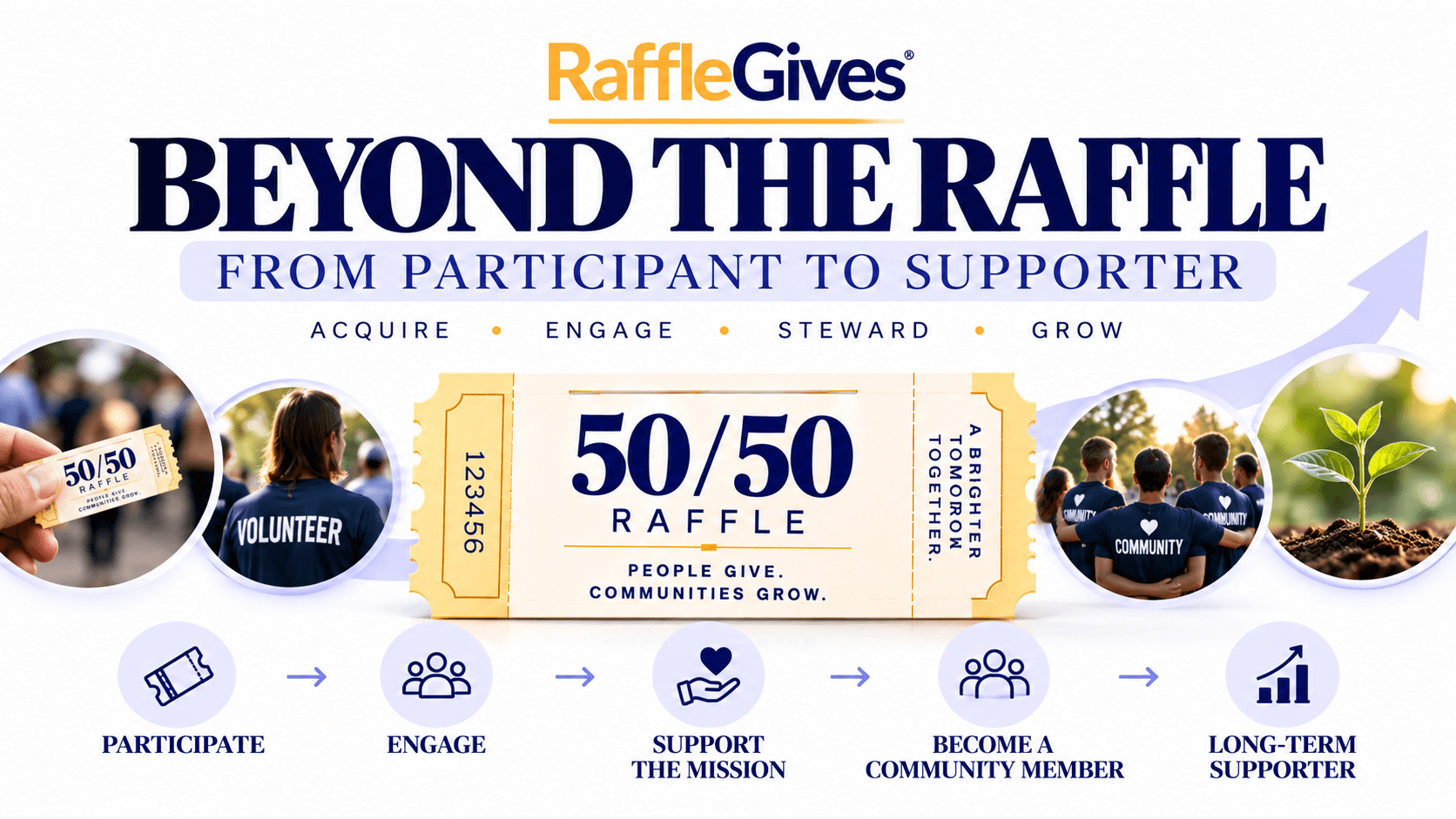
This is particularly valuable when nonprofits want to develop relationships beyond the current raffle. Our guide to turning raffle participants into long-term nonprofit supporters explains how that initial interaction can support future engagement.
Make It Easier for Supporters to Purchase Tickets
A campaign can attract substantial interest and still underperform if purchasing tickets is confusing or unnecessarily difficult. Mobile visitors may abandon a page when they cannot quickly understand the ticket options, eligibility requirements or next steps.
Nonprofits should review their campaign experience from the perspective of someone encountering the organization for the first time. The page should clearly identify the nonprofit, explain the raffle and present the available ticket options without unnecessary distractions.
Ticket packages should be easy to compare. Participants should understand how many entries they receive, the price of each option and any applicable terms before completing a purchase.
Organizations should also verify that the purchasing process works as intended on common mobile devices. A large share of campaign traffic may originate from social media, text messages or QR codes, making mobile usability an important operational consideration.
RaffleGives provides branded digital campaign pages and Stripe-connected payment functionality for qualifying nonprofit raffles where permitted by law. These tools help organizations provide a consistent campaign experience without building a custom ticketing system.
Use Ticket Packages to Improve Average Purchase Value
Increasing the number of purchasers is one way to improve ticket sales, but organizations can also evaluate how much participating supporters typically spend. A campaign that offers only one ticket option may not fully accommodate supporters interested in purchasing multiple entries.
For example, a nonprofit might offer individual tickets alongside larger ticket packages, provided the structure complies with applicable law. The goal is to make available options understandable and convenient rather than pressure participants into spending more.
Average purchase value provides a useful way to evaluate this part of campaign performance. If a raffle generates $5,000 from 200 purchasing transactions, the average purchase value is $25.
If the same number of purchasers later generates $6,000, the average increases to $30. That difference could reflect changes in ticket selection, audience composition or other campaign factors, so organizations should evaluate the underlying data rather than automatically attributing it to one change.
Ticket pricing and package structures may be regulated by state law. Nonprofits should confirm that any proposed pricing changes are permitted and consistent with their approved raffle terms before implementing them.
Use QR Codes to Connect Offline Audiences to Your Digital Raffle
Not every supporter discovers a raffle through social media or email. Many nonprofits already interact with potential participants at community events, athletic competitions, meetings, restaurants, volunteer activities and other in-person gatherings.
QR codes can help connect those interactions to a digital campaign. Instead of asking someone to remember a website address, an organization can provide a scannable link that directs eligible participants to the raffle page.
A school might include a QR code on approved fundraising materials distributed at an event. A youth sports organization could display one at an authorized registration table, while a community partner might share approved materials at a participating location.
These placements can extend the usefulness of existing activities without requiring a separate advertising campaign. However, nonprofits should distinguish promoting a raffle from conducting an actual ticket sale, because some states regulate both activities differently.
A QR code does not make an otherwise prohibited online purchase lawful. Organizations must ensure that any resulting transactions comply with the applicable sales, location and payment restrictions.
Measure Which Channels Actually Generate Participation
Nonprofits often evaluate marketing performance by looking at likes, comments and shares. Those interactions can indicate interest, but they do not necessarily show whether a channel is producing raffle ticket sales.
A campaign might receive hundreds of social media reactions while generating relatively few purchases. Another channel may produce less visible engagement but introduce supporters who participate at a higher rate.
Where the available reporting supports it, organizations should compare campaign traffic, completed purchases, average transaction value and distribution activity across their outreach channels. These measurements can help identify which efforts deserve additional attention.
For example, if Ambassador referrals are producing meaningful participation while general social posts are attracting limited interest, the organization may benefit from spending more volunteer time supporting its Ambassadors. If email consistently produces strong results, the team may prioritize preparing a better sequence of campaign updates.
The goal is not to eliminate every channel that performs poorly during one campaign. It is to understand where the organization is seeing results and make more informed decisions about its limited resources.

Reallocate Volunteer Time Based on Campaign Performance
For many nonprofits, volunteer time is one of the most limited resources available. A fundraising team may have several people willing to help but only a few hours each week to devote to the campaign.
That makes prioritization important. If one activity consistently produces little engagement while another creates meaningful participation, the organization should consider adjusting how volunteer time is allocated.
For example, a team might spend several hours creating social media graphics but very little time helping board members distribute the campaign through their own networks. If personal outreach proves more effective, reallocating some of that time could improve results without increasing spending.
This does not mean abandoning branding or social media. Both can contribute to credibility and campaign awareness, even when their direct sales impact is difficult to measure.
The objective is to balance activities according to their demonstrated value. A small fundraising team can accomplish more when its members understand which tasks matter most.
Build Momentum Throughout the Campaign
Raffle promotion should not depend entirely on a strong opening announcement. Campaigns often need sustained communication to remain visible throughout the fundraising period.
A useful approach is to organize outreach around meaningful milestones. The launch introduces the opportunity, subsequent updates explain progress and the final phase reminds eligible supporters of the approaching deadline.
For a 50/50 raffle, the changing prize amount may provide a natural reason to communicate updates. Organizations can also highlight the fundraising mission, recognize participating community partners and explain how supporters can help expand the campaign.
The messaging should remain accurate and proportionate. Artificial urgency, misleading prize claims or repeated pressure can damage trust and reduce the quality of the supporter experience.
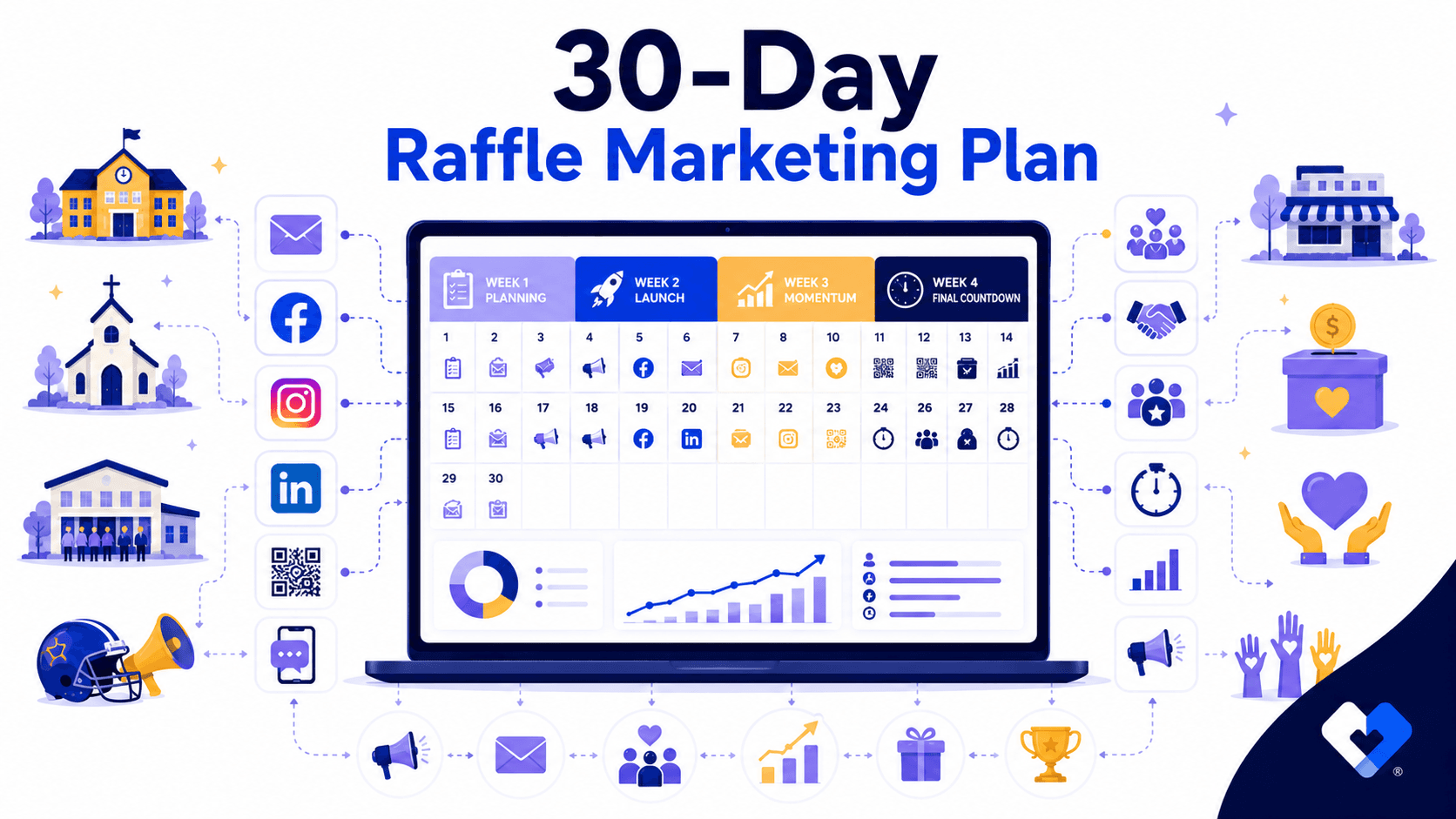
Organizations seeking a detailed promotional calendar can use our 30-Day Online 50/50 Raffle Marketing Plan. That guide covers campaign scheduling, while this article focuses on improving the effectiveness of the resources already being used.
Can Small Nonprofits Compete With Larger Fundraising Campaigns?
Large organizations may have substantial marketing budgets, dedicated staff and established media relationships. Smaller nonprofits often operate with fewer resources, but they may have strong community relationships that larger campaigns cannot easily replicate.
A local nonprofit with 500 engaged supporters can potentially reach a much larger audience when those supporters actively share its fundraiser. The organization may also benefit from close relationships with community businesses, volunteers and program participants.
These advantages do not guarantee higher ticket sales. They do, however, create opportunities to distribute a campaign without relying entirely on paid advertising.
The RaffleGives Ambassador Program is designed to help organizations activate these existing networks through shareable links and QR codes. This allows nonprofits to approach fundraising distribution as a coordinated community effort rather than a task assigned exclusively to a marketing department.
The same principle can operate at a much larger scale. Our article on the network effect in youth fundraising explores how schools, sports teams, Scouting groups and distributed organizations can extend a campaign through multiple layers of existing relationships.
What Should Nonprofits Do When Ticket Sales Slow Down?
A slowdown does not necessarily mean the campaign has exhausted its potential audience. It may indicate that promotional activity has become repetitive, supporters need another reason to engage or certain distribution channels are no longer producing meaningful participation.
The first step is to review available campaign data. Determine whether traffic has declined, purchasing activity has slowed or average transaction values have changed.
If fewer people are reaching the campaign, focus on distribution. Encourage participating Ambassadors to share approved materials, reconnect with existing supporters and coordinate relevant updates through the organization's established channels.
If campaign traffic remains strong but purchases decline, review the purchasing experience and messaging. Confirm that the page is functioning properly, ticket options are clear and participants understand the applicable terms.
Organizations should avoid making unapproved changes to ticket pricing, drawing dates or other regulated campaign details. Any material modification should be reviewed against the applicable legal requirements and campaign rules.
How RaffleGives Helps Nonprofits Improve Campaign Efficiency
RaffleGives provides qualifying nonprofits with a purpose-built digital platform for conducting authorized cash and 50/50 raffles. The platform combines branded campaign pages, ticket tracking, reporting tools, Stripe-connected payments and the Ambassador Program.
These capabilities can help organizations reduce administrative work and coordinate their fundraising activity more effectively. Instead of relying entirely on paper tickets, manual tracking and disconnected communications, nonprofit teams can manage important aspects of the campaign through a centralized system.
The Ambassador Program is especially relevant to organizations seeking to expand distribution without significantly increasing advertising expenditure. By providing supporters with shareable campaign pathways, nonprofits can involve more people in helping the fundraiser reach eligible audiences.
RaffleGives does not charge a monthly subscription or upfront platform fee. Its standard platform fee is 8% of gross ticket sales, with Stripe payment-processing charges separate.
Organizations must still confirm that their raffle, payment methods, promotional activities and platform arrangements comply with applicable law. For additional information, review our RaffleGives online raffle platform guide and Raffle Laws by State.
Frequently Asked Questions
How Can I Sell More Raffle Tickets Without Paying for Advertising?
Start by activating existing supporters, volunteers, board members and community partners. Improve campaign messaging, simplify the purchasing experience and use trackable distribution methods to understand which activities generate participation.
What Is the Most Effective Way to Promote a Nonprofit Raffle?
There is no single channel that performs best for every organization. Email, personal outreach, social media, community partnerships and Ambassador distribution can all contribute, depending on the audience and campaign structure.
Can Fundraising Ambassadors Increase Raffle Ticket Sales?
Ambassadors can help introduce a raffle to people outside the nonprofit's existing audience. Their effectiveness depends on participation, audience relevance, communication quality and applicable legal restrictions.
Do QR Codes Help Sell More Raffle Tickets?
QR codes can make it easier for eligible supporters to access a digital raffle from printed materials and in-person events. Their effectiveness depends on placement, audience interest and whether the resulting transaction is legally permitted.
Should Nonprofits Offer Multiple Raffle Ticket Packages?
Multiple packages may provide flexibility for supporters interested in purchasing different numbers of entries. Organizations should ensure that their pricing structure is clearly disclosed and permitted under applicable charitable gaming rules.
What Should a Nonprofit Do if Raffle Sales Are Below Expectations?
Identify whether the primary problem involves awareness, engagement or conversion. Then focus available resources on the stage that needs improvement rather than automatically increasing advertising spending.
Can Nonprofits Use Social Media to Promote Online Raffles?
Social media promotion may be permitted, but charitable gaming rules and platform policies vary. Organizations should confirm the requirements governing advertising, ticket sales and purchaser eligibility before launching a campaign.
How Can Nonprofits Measure Raffle Marketing Performance?
Useful measurements include gross ticket sales, number of purchasing transactions, average purchase value, campaign traffic and Ambassador activity. Where supported by available reporting, organizations can also evaluate performance across individual distribution channels.
Better Fundraising Results Begin With Better Use of Your Existing Resources
Nonprofits do not always need a larger marketing budget to improve raffle performance. In many cases, the opportunity is to make better use of existing supporters, simplify the purchasing experience and focus limited resources on activities that generate meaningful participation.
A successful campaign depends on more than the number of promotional messages published. Organizations need to understand how people discover the raffle, what encourages them to participate and where the process can be improved.
By activating volunteers, engaging Ambassadors, strengthening campaign messaging and evaluating available performance data, nonprofits can build a more efficient fundraising approach. Those improvements may continue providing value across future campaigns, even when advertising budgets remain limited.
The objective is not simply to spend less. It is to get more value from the relationships, time and resources your organization already has.
Turn Your Existing Network Into a Stronger Fundraising Campaign
RaffleGives helps qualifying nonprofits launch and manage digital cash and 50/50 raffles while expanding campaign distribution through supporters and Ambassadors.
With branded campaign pages, Stripe-connected payments, ticket tracking, reporting and shareable fundraising links, your organization can spend less time managing disconnected processes and more time engaging the community behind its mission.
No monthly subscription. No upfront platform fee. Performance-based pricing.
Get Started Free With RaffleGives
Related Reading
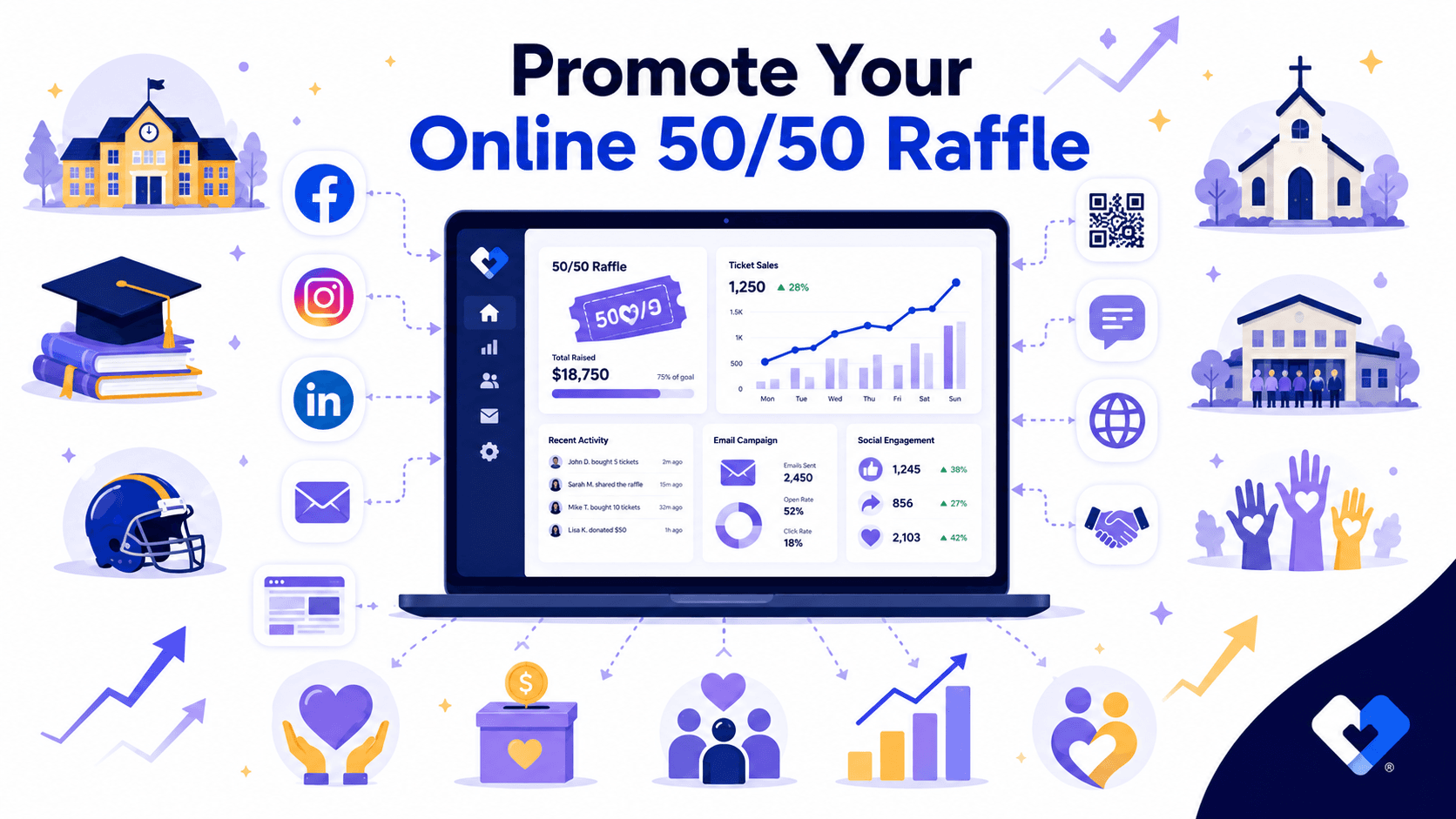
For a comprehensive overview of promotional channels and campaign messaging, read How to Promote an Online 50/50 Raffle.
Organizations looking for a structured campaign schedule can use our 30-Day Online 50/50 Raffle Marketing Plan.
To learn how larger networks can support campaign distribution, explore The Network Effect in Youth Fundraising.
Before accepting online ticket purchases, review Can Nonprofits Sell Raffle Tickets Online? and the 501(c)(3) Raffle Rules guide.
This article provides general educational information and does not constitute legal, financial or tax advice. Charitable gaming laws vary by jurisdiction, and organizations should confirm applicable requirements before conducting or promoting a raffle.